Wednesday, October 20, 2010

Kidney Cyst

Kidney Cyst

Kidney Cysts

A cyst is a collection of fluid. Kidney cysts are very common (a third of us have one) and usually cause no problems. Occasionally, a cyst can increase in size and produce pain and a high blood pressure due to compression of the rest of the kidney. The first-line treatment of such a cyst is to drain it under a local anaesthetic as most will not re-fill. If the cyst does re-fill and continues to cause symptoms it is best dealt with by an operation.

The kidneys lie high in the abdomen, below the diaphragm and as a result can only be reached by traditional surgery through a large incision. The laparoscopic operation is performed through 3 x 5-10 mm cuts near the rib cage.

Although laparoscopy is a type of keyhole surgery, the view obtained is much better than looking through a keyhole. Modern equipment produces a wide, bright, clear and magnified view of the operation. The gas used to distend the abdomen during laparoscopy also greatly reduces bleeding during surgery.

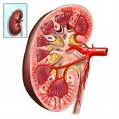
Kidney Creatinine

Kidney Creatinine

Kidney function tests check how well the kidneys filter and transport waste materials from the blood into the urine.

Who is a candidate for the test?

Kidney function tests are usually ordered when a healthcare provider suspects a disease that may be affecting the kidneys. These tests are also used to monitor someone who already has kidney disease.

How is the test performed?

There are four major tests. Each test is described more fully in separate articles in this encyclopedia. They are:

creatinine

creatinine-urine

creatinine clearance

BUN

Creatinine and BUN are blood tests that measure metabolic breakdown products in the body. It is the role of the kidney to get these waste products into the urine. When the kidney does not work properly, these products are not put into the urine and the levels become elevated in the blood.

Urine creatinine measures the amount of creatinine that is excreted into the urine.

Creatinine clearance is a fairly precise way to estimate the exact amount of function a kidney has compared to normal. Any of these tests may be ordered to help measure kidney function. Which one is used often depends on the disease that is suspected.